

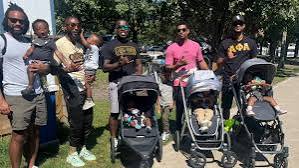
On Chicago’s South Side, where narratives about Black fatherhood are often shaped by absence rather than presence, Daddy Victory Club quietly does something radical: it makes visible what has always existed — engaged, intentional fathers showing up for their children and their community.
Founded by Kouri Marshall, Daddy Victory Club is not just a parenting group. It’s a cultural intervention. It challenges long-standing stereotypes while creating a public, communal space for fathers — especially Black fathers — to be seen, supported, and celebrated.
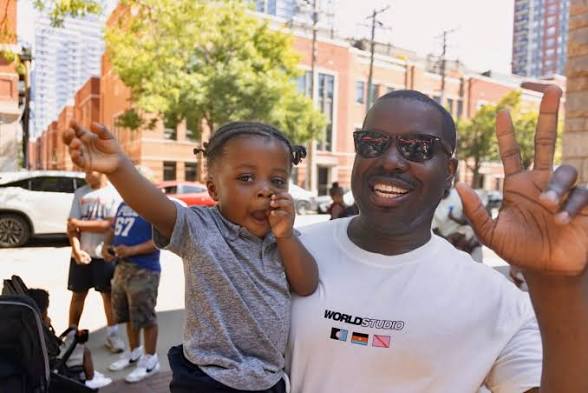
A Founder Responding to a Cultural Gap
Marshall’s work begins with a simple but powerful observation: fathers rarely have spaces built for them. While many family-focused resources exist on the South Side, few center the emotional, social, and communal needs of dads themselves.
Daddy Victory Club emerged as a response to that gap. Rather than framing fatherhood as a problem to be fixed, the organization frames it as a victory to be lived. The name itself reframes the conversation — fatherhood isn’t survival, it’s success.
This approach resonates deeply on the South Side, where community visibility matters. The founder’s vision isn’t about lectures or programs behind closed doors; it’s about presence in real neighborhood spaces, where everyday life happens.
Public Fatherhood as Cultural Statement
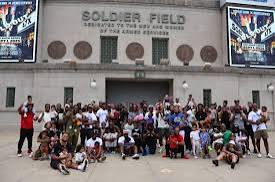
One of the most impactful things Daddy Victory Club does is host public, family-centered events across the South Side — walks, strolls, and gatherings where fathers show up with their kids in tow.
These events do something subtle but powerful:
- They normalize active fatherhood in public spaces
- They turn sidewalks, parks, and neighborhood corridors into places of shared pride
- They create moments where children see their fathers surrounded by other men doing the same work
On the South Side, where public space often carries heavy social meaning, these gatherings become a form of cultural visibility. Fathers pushing strollers, laughing, talking, and supporting each other disrupts the dominant imagery too often associated with Black men in the city.
It’s not performative. It’s lived.
Community Before Programming
What makes Daddy Victory Club culturally impactful is that it doesn’t try to “save” anyone. There’s no top-down messaging. The events are simple by design — walking, talking, being present.
That simplicity allows trust to grow. Conversations happen organically. New fathers learn from experienced ones. Kids see men building community without ego. Over time, these moments build something larger than any single event: a culture of shared responsibility and pride in fatherhood.
On the South Side, where extended family and community networks have always played a role in raising children, Daddy Victory Club taps into a familiar tradition — it just modernizes it.
Redefining Legacy on the South Side
The cultural impact of Daddy Victory Club isn’t measured by scale or spectacle. It’s measured in consistency. Showing up repeatedly in South Side spaces sends a message that fatherhood belongs in public life, not just private homes.
For children, it creates memory.
For fathers, it creates belonging.
For the community, it creates a counter-narrative.
In a city where so much attention is paid to what’s broken, Daddy Victory Club quietly documents what’s working — one walk, one conversation, one father at a time.


